
ETFs explained

ETF strategies for beginners: building a diversified portfolio

ETFs
MicrosoftTeams-image (3)
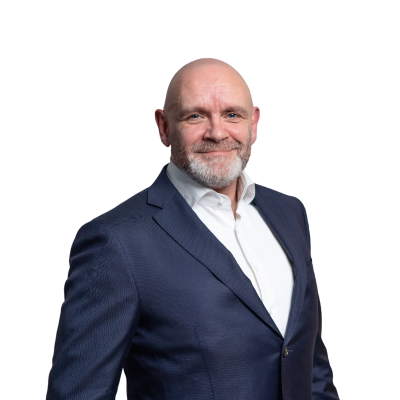
Koen Hoorelbeke

Investment and Options Strategist

Building a successful ETF portfolio doesn't require complex strategies or constant trading. For anyone new to ETF investing, these straightforward approaches can potentially help create a resilient portfolio designed for long-term growth.

Dollar-cost averaging: consistency beats timing

Dollar-cost averaging involves investing a fixed amount at regular intervals, regardless of market conditions. This disciplined approach removes the stress of trying to time market highs and lows.

How it works in practice:
A Saxo Bank client investing EUR 500 monthly in a global equity ETF will purchase more shares when prices are low and fewer when prices are high. Over time, this typically results in a lower average cost per share than trying to time market entries.

Real-world example:
During the market volatility of 2020, investors who maintained monthly EUR 500 contributions to a global ETF automatically bought more shares during March's lows and fewer during December's highs—without needing to make emotional decisions during uncertain times.

Core-satellite strategy: balancing stability and opportunity

The core-satellite approach divides your portfolio into two components: a stable "core" of broad market ETFs and smaller "satellite" positions in specialized ETFs.

Portfolio structure:

  • Core (70-80%): low-cost, broadly diversified ETFs tracking major indices
  • Satellites (20-30%): specialized ETFs targeting specific sectors, themes, or regions you believe have growth potential

Real-world example:
A beginning investor might allocate 75% of their portfolio to a combination of global equity and bond ETFs (the core), while using the remaining 25% for targeted exposure to areas like technology, healthcare, or emerging markets (the satellites).

The 60/40 portfolio: time-tested balance

The classic 60/40 portfolio—60% stocks and 40% bonds—has been a staple allocation strategy for decades, offering a balance between growth potential and stability.

Modern implementation with ETFs:

  • 60% in equity ETFs (potentially divided between global, regional, and sector ETFs)
  • 40% in bond ETFs (government, corporate, or a mix based on your risk tolerance)

Real-world example:
A Saxo Bank client nearing retirement might implement this through a global equity ETF (60%) paired with a high-quality corporate bond ETF (40%), creating a portfolio designed to weather various market environments while still providing growth potential.

The three-fund portfolio: simplicity at its best

For those who value ultimate simplicity, the three-fund portfolio uses just three broad-market ETFs to create a globally diversified investment mix.

Portfolio components:

  • Total domestic stock market ETF (e.g., covering your home country or region)
  • Total international stock market ETF (covering developed and emerging markets outside your home region)
  • Total bond market ETF (providing fixed income exposure)

Real-world example:
A European investor might allocate 40% to a STOXX Europe 600 ETF, 30% to an MSCI World ex-Europe ETF, and 30% to a European Aggregate Bond ETF—creating comprehensive global exposure with just three holdings.

Age-based asset allocation: adjusting with your timeline

This strategy bases your stock/bond allocation on your age, automatically becoming more conservative as you approach your investment goal.

Traditional formula:
Subtract your age from 100 to determine your equity percentage (remainder in bonds)

Modern adaptation:
Many financial professionals now suggest subtracting from 110 or 120 instead of 100, recognizing increased longevity and the need for growth.

Real-world example:
A 30-year-old using this approach might allocate 80-90% to equity ETFs and 10-20% to bond ETFs, gradually shifting toward more bonds with each passing year.

The most important strategy for beginners is the one you'll actually follow consistently. Choose an approach that matches your temperament and time availability, then commit to it through market cycles for the best long-term results.

Outrageous Predictions 2026

01 /

  • Executive Summary: Outrageous Predictions 2026

    Outrageous Predictions

    Executive Summary: Outrageous Predictions 2026

    Saxo Group

    Read Saxo's Outrageous Predictions for 2026, our latest batch of low probability, but high impact ev...
  • A Fortune 500 company names an AI model as CEO

    Outrageous Predictions

    A Fortune 500 company names an AI model as CEO

    Charu Chanana

    Chief Investment Strategist

    Can AI be trusted to take over in the boardroom? With the right algorithms and balanced human oversi...
  • Dollar dominance challenged by Beijing’s golden yuan

    Outrageous Predictions

    Dollar dominance challenged by Beijing’s golden yuan

    Charu Chanana

    Chief Investment Strategist

    Beijing does an end-run around the US dollar, setting up a framework for settling trade in a neutral...
  • Obesity drugs for everyone – even for pets

    Outrageous Predictions

    Obesity drugs for everyone – even for pets

    Jacob Falkencrone

    Global Head of Investment Strategy

    The availability of GLP-1 drugs in pill form makes them ubiquitous, shrinking waistlines, even for p...
  • Dumb AI triggers trillion-dollar clean-up

    Outrageous Predictions

    Dumb AI triggers trillion-dollar clean-up

    Jacob Falkencrone

    Global Head of Investment Strategy

    Agentic AI systems are deployed across all sectors, and after a solid start, mistakes trigger a tril...
  • Quantum leap Q-Day arrives early, crashing crypto and destabilizing world finance

    Outrageous Predictions

    Quantum leap Q-Day arrives early, crashing crypto and destabilizing world finance

    Neil Wilson

    Investor Content Strategist

    A quantum computer cracks today’s digital security, bringing enough chaos with it that Bitcoin crash...
  • Taylor Swift-Kelce wedding spikes global growth

    Outrageous Predictions

    Taylor Swift-Kelce wedding spikes global growth

    John J. Hardy

    Global Head of Macro Strategy

    Next year’s most anticipated wedding inspires Gen Z to drop the doomscrolling and dial up the real w...
  • SpaceX announces an IPO, supercharging extraterrestrial markets

    Outrageous Predictions

    SpaceX announces an IPO, supercharging extraterrestrial markets

    John J. Hardy

    Global Head of Macro Strategy

    Financial markets go into orbit, to the moon and beyond as SpaceX expands rocket launches by orders-...
  • Britain’s Great EU Backdoor Return

    Outrageous Predictions

    Britain’s Great EU Backdoor Return

    Neil Wilson

    Investor Content Strategist

    Faced with rolling fiscal, economic, trade and political crises the UK government sneaks back into t...
  • Despite concerns, U.S. 2026 mid-term elections proceed smoothly

    Outrageous Predictions

    Despite concerns, U.S. 2026 mid-term elections proceed smoothly

    John J. Hardy

    Global Head of Macro Strategy

    In spite of outstanding threats to the American democratic process, the US midterms come and go cord...

None of the information provided on this website constitutes an offer, solicitation, or endorsement to buy or sell any financial instrument, nor is it financial, investment, or trading advice. Saxo Capital Markets UK Ltd. (Saxo) and the Saxo Bank Group provides execution-only services, with all trades and investments based on self-directed decisions. Analysis, research, and educational content is for informational purposes only and should not be considered advice nor a recommendation. Access and use of this website is subject to: (i) the Terms of Use; (ii) the full Disclaimer; (iii) the Risk Warning; and (iv) any other notice or terms applying to Saxo’s news and research.

Saxo’s content may reflect the personal views of the author, which are subject to change without notice. Mentions of specific financial products are for illustrative purposes only and may serve to clarify financial literacy topics. Content classified as investment research is marketing material and does not meet legal requirements for independent research.

Before making any investment decisions, you should assess your own financial situation, needs, and objectives, and consider seeking independent professional advice. Saxo does not guarantee the accuracy or completeness of any information provided and assumes no liability for any errors, omissions, losses, or damages resulting from the use of this information.

Please refer to our full disclaimer for more details. Past Performance is not indicative of future results.

Saxo
40 Bank Street, 26th floor
E14 5DA
London
United Kingdom

Contact Saxo

Select region

United Kingdom
United Kingdom

Trade Responsibly
All trading carries risk. To help you understand the risks involved we have put together a series of Key Information Documents (KIDs) highlighting the risks and rewards related to each product. Read more
Additional Key Information Documents are available in our trading platform.

Saxo is a registered Trading Name of Saxo Capital Markets UK Ltd (‘Saxo’). Saxo is authorised and regulated by the Financial Conduct Authority, Firm Reference Number 551422. Registered address: 26th Floor, 40 Bank Street, Canary Wharf, London E14 5DA. Company number 7413871. Registered in England & Wales.

This website, including the information and materials contained in it, are not directed at, or intended for distribution to or use by, any person or entity who is a citizen or resident of or located in the United States, Belgium or any other jurisdiction where such distribution, publication, availability or use would be contrary to applicable law or regulation.

It is important that you understand that with investments, your capital is at risk. Past performance is not a guide to future performance. It is your responsibility to ensure that you make an informed decision about whether or not to invest with us. If you are still unsure if investing is right for you, please seek independent advice. Saxo assumes no liability for any loss sustained from trading in accordance with a recommendation.

Apple, iPad and iPhone are trademarks of Apple Inc., registered in the U.S. and other countries. App Store is a service mark of Apple Inc. Android is a trademark of Google Inc.

©   since 1992