
Steen image 1142x160

Bank runs raise the stakes in the Fragmentation Game

Quarterly Outlook
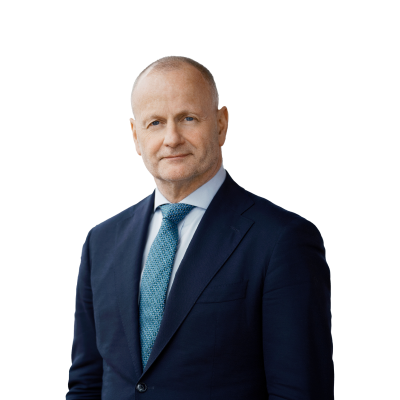
Picture of Steen Jakobsen
Steen Jakobsen

Chief Investment Officer

Summary:  A new fragmented world order can render some of today's infrastructure obsolete, but it also calls for massive new investments across the globe, which requires a new set of strategic and tactical investment strategies.


We have the highest bond volatility in history, the war in Ukraine looks to have no end, and monetary authorities have moved the interest dial into a position which was finally able to “break something”. This is partly their strategy, partly a fall-out from a singular focus on fighting inflation without addressing what else might be at risk.

The jarring market events in March also mean that Fed Chair Powell may pivot after all, even after re-pivoting hawkish from his initial pivot. Confused? You should be! As we look forward to the end of this year, we don’t know whether the Fed will deliver another 75-100 bps hikes to fight inflation or cut by 75 bps to protect the fragile bank system and the taxed economic system behind it. How did we get here – could it really be a couple of bank runs that have completely reset forward expectations? On policy, maybe, but not on inflation.

Since Long Term Capital Management (LTCM) went bust in 1998, the world’s central bankers have used low interest rates and ever larger liquidity injections to induce more and more risk-taking without ever forcing too-leveraged banks and risk takers to take a loss, with the Lehman bankruptcy the exception that really proved the rule on the enormous ensuing bailout during the GFC.

Fast forward to today and we see the March intervention in the wake of the Silicon Valley Bank (SVB) collapse and then the Credit Suisse takeover by UBS arranged and subsidised heavily by the Swiss National Bank. There is even sudden talk of insuring all deposits to prevent bank runs. Are any and all financial institutions now moved into the “systemic” category?

What was SVB’s misstep that saw their stock marked from a price of over 100 to zero in two days? They had no clue what they were doing with their bond portfolio, which they kept growing as deposits came in the door and the Fed, their regulator, kept telling them: “Don’t worry! inflation is transitory, it will be back below 2% soon!”

It seems that transitory didn’t win, so Silicon Valley Bank became the poster child for a very old kind of panic, one in which depositors, lost faith in the bank and made for the exit  all at once. SVB had a very unusual depositor base, but many regional and smaller banks have made similar missteps in investing bank funds in longer duration bonds, risking depositor stampedes to safer shores everywhere.

Regulators helped create the situation with the Held-to-Maturity (HTM) concept in accounting that allows banks to keep their bond holdings at the purchase price despite the mark-to-market value of bonds trading at perhaps a 20-30% discount. After the panic rescue of all of SVB’s depositors regardless of size and a new Fed facility – the BTFP (no, really) that allows any bank to borrow liquidity against its HTM portfolio at par and not mark-to-market, Voila, problem solved! Or is it?

No, because what if a bank’s funding costs on the liability side – the cost of its deposits - rise even if its depositors don’t pull all of their funds but look for places to park their funds at higher rates? Banks have ignored their customers for the longest time, focusing on serving big financial engineering needs of mega caps, private equity, venture capital funds and hedge funds. Now depositors have had enough. Too little transparency, no service and no interest rates. Major US money center banks paid zero interest on the current account as late as last week, where the Fed was expected to take short-term interest rates to well above 5%! 

This banking crisis so far is not about the solvency of banks, but whether the banks can continue to operate profitably if funding costs rise and funds actually “go elsewhere”. How about a US 6-month treasury yielding 4.50%, for example? Big banks can only run with enough liabilities, deposits, to fund their assets. For whatever reason, but especially in a panic, if clients withdraw money, it forces banks to liquidate assets. That’s what this crisis is about.

But enough about bank runs, though the risks mentioned above will inevitably impact what this Q2 Outlook was meant to be about before the bank blowups of March: the Fragmentation Game. This is our term for the global need to secure access to energy, other vital resources, supply chains and computer power (mostly in the shape of semiconductors) but also how new alliances are being formed and shaped to rebalance the world away from western dominance.

We could have called it deglobalisation, but the world is still global in its trade, it’s just fragmenting more into blocs. Navigating these fragments will be key in investing not only this year but for the coming decades.

Being both strategic and tactical has never been more important, as a fragmenting and partially deglobalising world brings new production capacities where none existed before to secure supply chains, which will bring huge investments, as will the ongoing green transformation. Other fragments, on the other hand, may have excess capacity. Regardless, a Fragmentation Game overlay to investment decisions will be critical, as the far-flung, highly tuned and fully globalised networks break into new fragments and alignments.

Safe travels,
Steen

Outrageous Predictions 2026

01 /

  • Executive Summary: Outrageous Predictions 2026

    Outrageous Predictions

    Executive Summary: Outrageous Predictions 2026

    Saxo Group

    Read Saxo's Outrageous Predictions for 2026, our latest batch of low probability, but high impact ev...
  • A Fortune 500 company names an AI model as CEO

    Outrageous Predictions

    A Fortune 500 company names an AI model as CEO

    Charu Chanana

    Chief Investment Strategist

    Can AI be trusted to take over in the boardroom? With the right algorithms and balanced human oversi...
  • Dollar dominance challenged by Beijing’s golden yuan

    Outrageous Predictions

    Dollar dominance challenged by Beijing’s golden yuan

    Charu Chanana

    Chief Investment Strategist

    Beijing does an end-run around the US dollar, setting up a framework for settling trade in a neutral...
  • Obesity drugs for everyone – even for pets

    Outrageous Predictions

    Obesity drugs for everyone – even for pets

    Jacob Falkencrone

    Global Head of Investment Strategy

    The availability of GLP-1 drugs in pill form makes them ubiquitous, shrinking waistlines, even for p...
  • Dumb AI triggers trillion-dollar clean-up

    Outrageous Predictions

    Dumb AI triggers trillion-dollar clean-up

    Jacob Falkencrone

    Global Head of Investment Strategy

    Agentic AI systems are deployed across all sectors, and after a solid start, mistakes trigger a tril...
  • Quantum leap Q-Day arrives early, crashing crypto and destabilizing world finance

    Outrageous Predictions

    Quantum leap Q-Day arrives early, crashing crypto and destabilizing world finance

    Neil Wilson

    Investor Content Strategist

    A quantum computer cracks today’s digital security, bringing enough chaos with it that Bitcoin crash...
  • Taylor Swift-Kelce wedding spikes global growth

    Outrageous Predictions

    Taylor Swift-Kelce wedding spikes global growth

    John J. Hardy

    Global Head of Macro Strategy

    Next year’s most anticipated wedding inspires Gen Z to drop the doomscrolling and dial up the real w...
  • SpaceX announces an IPO, supercharging extraterrestrial markets

    Outrageous Predictions

    SpaceX announces an IPO, supercharging extraterrestrial markets

    John J. Hardy

    Global Head of Macro Strategy

    Financial markets go into orbit, to the moon and beyond as SpaceX expands rocket launches by orders-...
  • Britain’s Great EU Backdoor Return

    Outrageous Predictions

    Britain’s Great EU Backdoor Return

    Neil Wilson

    Investor Content Strategist

    Faced with rolling fiscal, economic, trade and political crises the UK government sneaks back into t...
  • Despite concerns, U.S. 2026 mid-term elections proceed smoothly

    Outrageous Predictions

    Despite concerns, U.S. 2026 mid-term elections proceed smoothly

    John J. Hardy

    Global Head of Macro Strategy

    In spite of outstanding threats to the American democratic process, the US midterms come and go cord...

This content is marketing material. 

None of the information provided on this website constitutes an offer, solicitation, or endorsement to buy or sell any financial instrument, nor is it financial, investment, or trading advice. Saxo Capital Market Ltd. (SCML) provides execution-only services, with all trades and investments based on self-directed decisions. Analysis, research, and educational content is for informational purposes only and should not be considered advice or a recommendation.

SCML content may reflect the personal views of the author, which are subject to change without notice. Mentions of specific financial products are for illustrative purposes only and may serve to clarify financial literacy topics. Content classified as investment research is marketing material and does not meet legal requirements for independent research.

SCML partners with companies that provide compensation for promotional activities conducted on its platform. Some partners also pay retrocessions contingent on clients investing in products from those partners. 

While SCML receives compensation from these partnerships, all educational and research content remains focused on providing information to clients.

Before making any investment decisions, you should assess your own financial situation, needs, and objectives, and consider seeking independent professional advice. SCML does not guarantee the accuracy or completeness of any information provided and assumes no liability for any errors, omissions, losses, or damages resulting from the use of this information.

Please refer to our full disclaimer and notification on non-independent investment research for more details.

Saxo
40 Bank Street, 26th floor
E14 5DA
London
United Kingdom

Contact Saxo

Select region

United Kingdom
United Kingdom

Trade Responsibly
All trading carries risk. To help you understand the risks involved we have put together a series of Key Information Documents (KIDs) highlighting the risks and rewards related to each product. Read more
Additional Key Information Documents are available in our trading platform.

Saxo is a registered Trading Name of Saxo Capital Markets UK Ltd (‘Saxo’). Saxo is authorised and regulated by the Financial Conduct Authority, Firm Reference Number 551422. Registered address: 26th Floor, 40 Bank Street, Canary Wharf, London E14 5DA. Company number 7413871. Registered in England & Wales.

This website, including the information and materials contained in it, are not directed at, or intended for distribution to or use by, any person or entity who is a citizen or resident of or located in the United States, Belgium or any other jurisdiction where such distribution, publication, availability or use would be contrary to applicable law or regulation.

It is important that you understand that with investments, your capital is at risk. Past performance is not a guide to future performance. It is your responsibility to ensure that you make an informed decision about whether or not to invest with us. If you are still unsure if investing is right for you, please seek independent advice. Saxo assumes no liability for any loss sustained from trading in accordance with a recommendation.

Apple, iPad and iPhone are trademarks of Apple Inc., registered in the U.S. and other countries. App Store is a service mark of Apple Inc. Android is a trademark of Google Inc.

©   since 1992